Lucknow, Uttar Pradesh
Rafiq Ahmed
White-on-white that still reads in a photograph
Chikankari embroidery
Chikankari is often sold as a surface of tiny flowers with no regard for whether the wearer can lift an arm. Rafiq’s studio in Lucknow treats the stitch as shade on cloth. Density changes at the neckline, placket, and hem so a kurti or dress can be worn through a working day or a daytime function without feeling armoured. He trained under an ustad who still insists that a stitch you cannot feel from the inside is not finished.
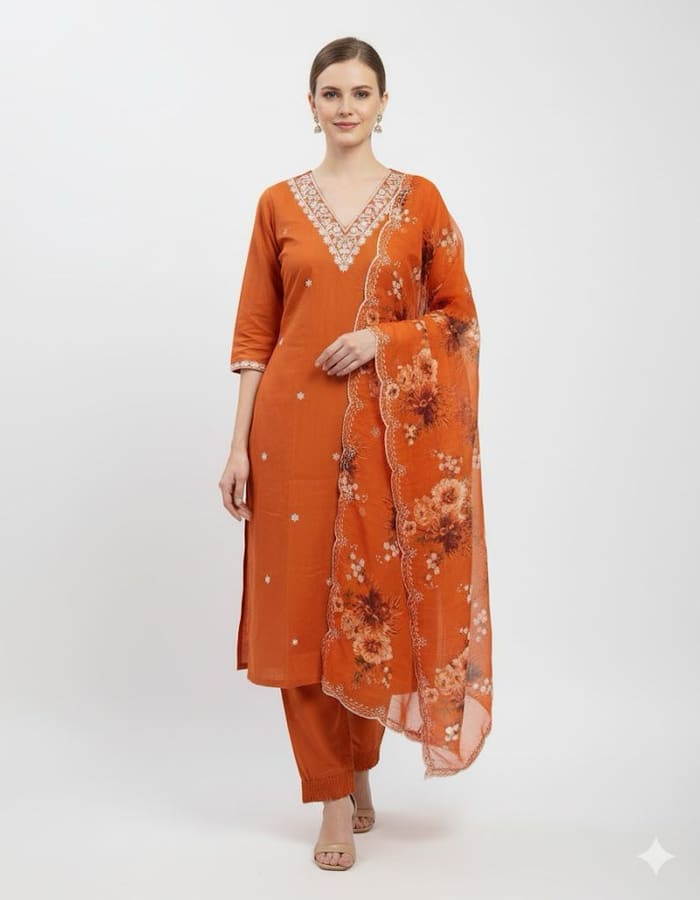
For Sandhya Vastralayam he works on cottons and light silks that already have a good hand. Embroidery is planned around seams so it does not crack when the garment is packed. White-on-white remains a signature because it photographs cleanly and sits with almost any jewellery. When we need festive lift, he adds a restrained second thread rather than covering the field.
The studio’s embroiderers are paid per finished panel with revisions built into the calendar, not squeezed into overnight batches. That is slower than trend fashion and the reason a chikankari kurti here should still look intentional after several washes. See the kurti and dress collections for current pieces, and the size guide if you are between fits.
Rafiq will tell you the craft survives only if people actually wear it. A panel that cannot travel, sit, or be cleaned is a sample, not clothing. We agree — which is why his work is in the shop, not only in a lookbook.