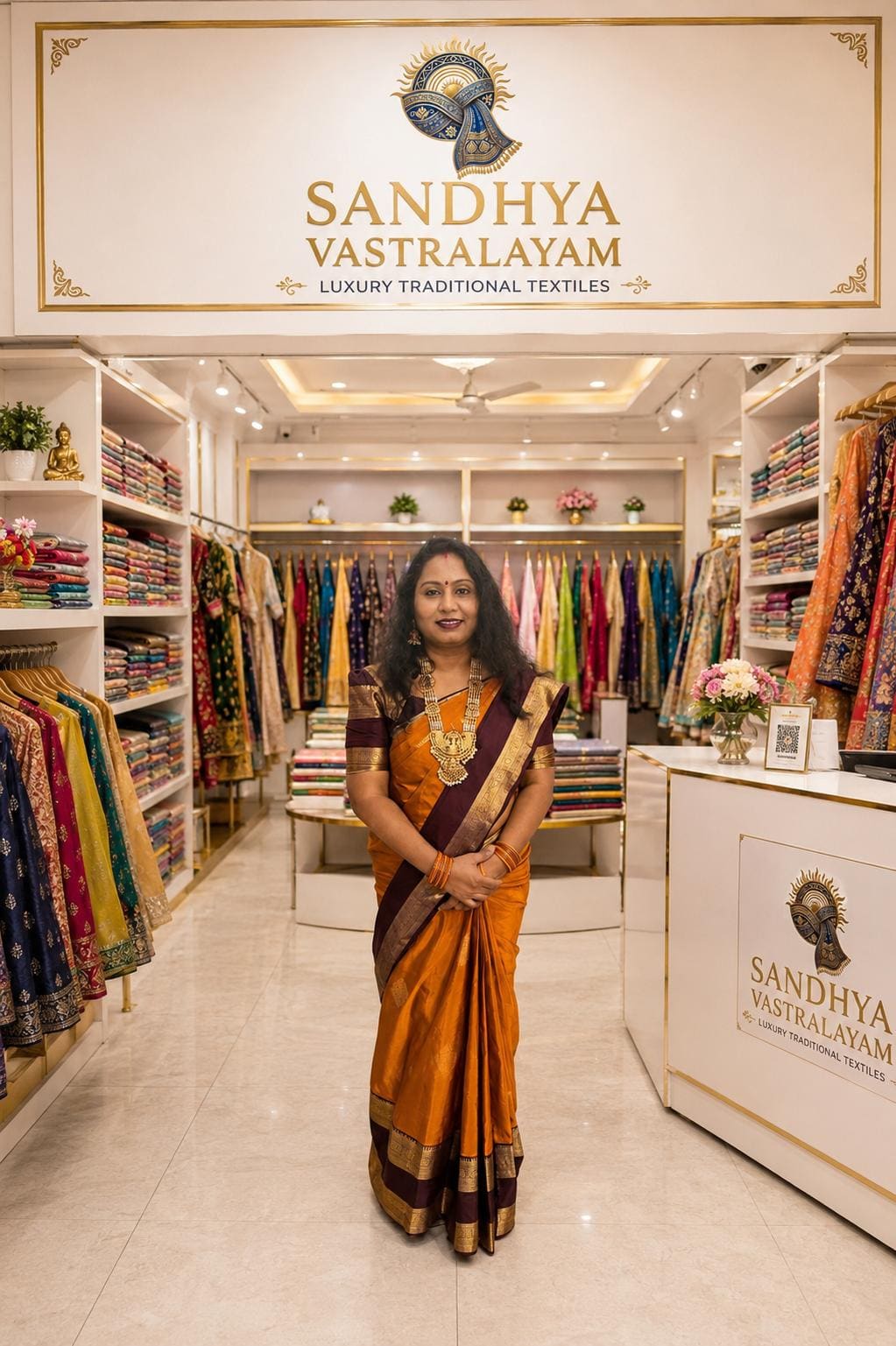
Varanasi, Uttar Pradesh
Meera Devi
Gold on silk, without the shout
Banarasi silk weaving
Meera learned the loom from her father before she was tall enough to reach the warp comfortably. In her workshop on the edge of Varanasi, Banarasi silk is still wound, dyed, and woven in lengths meant for a real drape — not a showroom mannequin that never sits down. She talks about borders the way a tailor talks about a shoulder: if the architecture is wrong, no amount of extra zari will save the garment.
The pieces she weaves for Sandhya Vastralayam keep that discipline. Motifs sit in the pallu and border so the field can stay breathable. Gold is used to catch light in a photograph, not to cover every inch of cloth. When we ask for a wedding saree, she will still refuse a design that cannot be packed, worn through a ceremony, and worn again at a cousin’s function. That refusal is why her work lasts.
Her workshop employs weavers on long seasons rather than rush orders. That stability is part of the price you see on a silk saree: time on the loom, fair wages, and finishing that does not unravel after one dry-clean. Visit the saree collection to see current lengths from this partnership, or read how we work with craft communities on our responsibility page.
If you write to us about a specific weave, we pass the question back. Meera would rather explain why a border sits where it does than pretend every saree is interchangeable. That is the standard we hold for every artisan story on this site.